Chat with us Uncategorized – Page 3 – Greystone
BOOK A ROOM BOOK A TABLE Order Takeaway
Close

A Treasure Hunt in the Mountains

This autumn, explore Lake Toxaway and the surrounding mountains and trails by geocaching! A cross between a scavenger hunt and a treasure hunt, geocaching involves using GPS coordinates, maps, or other clues to find hidden objects. These objects can be anything, from small bottles holding the location tracker to intricate, multi-step puzzles.

On geocaching.com, searchers can find a map to 19,000 geocaches in North Carolina and nearly one million in the United States. A quick glance at the map reveals geocaches in nearly any public place, hidden in the hollow of a tree in the Pisgah National Forest or even by a city crosswalk.

Once you come across a geocache, you can log it into the website or on a physical log included with the object. Just remember to leave the geocache where you found it, so everyone else can enjoy their treasure hunt, too.

Lake Toxaway is home to two geocaches of our very own! One is right by The Greystone, should you like to explore the area and have an outdoor adventure during your stay.

The History of the Pisgah National Forest

Spanning across 500,000 acres, the Pisgah National Forest is home to some of North Carolina’s most iconic and treasured scenery. From the rippling waters of Looking Glass Falls to the sprawling wildflowers of Black Balsam Knob, there is something for everyone among the natural wonders of this forest.

It may surprise readers to learn the origin of the Pisgah National Forest is linked to the history of another famous North Carolina landmark, the Biltmore. George Vanderbilt’s estate once encompassed 125,000 acres. He hired Frederick Law Olmstead to oversee the management of the estate’s lands, as well as the preservation of the area’s existing forests and the reforestation of other sections of the land. In 1898, the Biltmore Forest School, the country’s first school to teach sustainable forestry practices, was founded and located on the property.

The Vanderbilts weren’t alone in their concern for the preservation of forests. The Weeks Act was passed into law in 1911, which meant the federal government could now purchase and preserve private land. No property owners sold to them, however, until Edith Vanderbilt inherited the Biltmore and surrounding lands after her husband passed away in 1914.

In order to ensure the land remained protected and undeveloped, she sold 86,700 acres to the government so they could continue what the Vanderbilts began. The Pisgah National Forest was founded the very next year, becoming the state’s first national forest.

For those interested in learning more, the Cradle of Forestry is located a roughly 30-mile drive from The Greystone and provides interactive learning experiences about the beginning of forestry. The next time you find yourself in Pisgah, whether you’re driving through the Blue Ridge Parkway or hiking along mountaintops on the Appalachian Trail, know you’re among a significant piece of the country’s conservation history.

The Craft of Quilting

For hundreds if not thousands of years, the practice of quilting has served as a source of comfort and beauty. Though the exact origin of quilting is unknown, it likely began in the Middle East and Asia before spreading to Europe in the Middle Ages. Quilting gained popularity in America in the early 1800s, with women passing along their skills to the next generations and incorporating complex patterning and designs.

Today, Cashiers Quilters in nearby Sapphire is one of many quilting groups across the country where women share their skills and discuss the artform. At their weekly meetings, anywhere from a few members to twenty will gather at the Saint Jude Catholic Church to plan for upcoming quilt shows, learn techniques from other members or a visiting teacher, or do a “show and tell” of their current quilting project.

The quilts they make are both intricate and entirely unique to the artists’ own styles. They range from cool gray gradients to warm peach tones, squares with crochet stitching to hypnotizing kaleidoscope patterns.

According to Linda Maddox, a member and incoming leader of Cashiers Quilters, their membership includes new and experienced quilters alike. What’s most important is enthusiasm for the craft. “We support each other by sharing our love of quilting,” she says. “There are many different types of quilting and everyone might have a skill that we all would like to learn.”

In October of next year, the group will host their biennial quilt show. Through proceeds from this event, they’re able to fund their charitable giving to a local library, senior center, food pantry, and more. “There is also a small group called Mountain Valley Quilters consisting of mostly Cashiers Quilters,” Linda says. “The members donate money and their own fabrics to be able to make quilt donations. A lot of our quilts go to REACH, a Domestic Violence Center in Macon County.”

Just like in centuries’ past, quiltmakers continue to fill a need—bringing warmth and comfort to communities, while expressing themselves through this vivid, lasting artform.

To learn more about Cashiers Quilters and find quilt shows in the area, visit cashiersquilters.com.

The Cocktail Corner

Summer is here, along with our new seasonal cocktails! This season, we’re crafting bright, colorful, tasty, and fun drinks sprinkled with a dash of healthy ingredients from Asia and Italy—tea and aperitivo liquors.

Tea can be a delightful addition to cocktails. It offers a depth of flavor that complements various spirits, adding complexity and richness to the drink. Depending on the type of tea used, whether black, green, or herbal, it can impart subtle nuances ranging from earthy and floral to fruity and spicy. Tea contains antioxidants and other beneficial compounds that can contribute to a cocktail’s perceived healthiness. Overall, incorporating tea into cocktails adds an element of sophistication and depth to the drink.

To sample our offerings this season, try: the Green Confusion, which contains matcha (green tea); the Smoking Jacket, which has Lapsang Souchong (black tea); and the Paddy Melt, incorporating chamomile (herbal tea).

Aperitivo liquors are renowned for their ability to stimulate the appetite, aid digestion, and promote digestive health. These spirits, often characterized by their bittersweet flavors and lower alcohol content, serve as a perfect base for refreshing and light cocktails. Popular aperitif liquors bring a unique blend of herbal, citrus, and botanical notes, adding complexity and depth to our cocktails.

We wove these liquors throughout our seasonal cocktail menu! Here are a couple we love: the Rascal cocktail incorporates Yellow Chartreuse, which is sweeter with floral and citrusy notes; and the Blossom cocktail, which includes Campari and Misty Meadows, incorporating the herbal, floral, and spicy Green Chartreuse.


A Look At The Red Cardinal

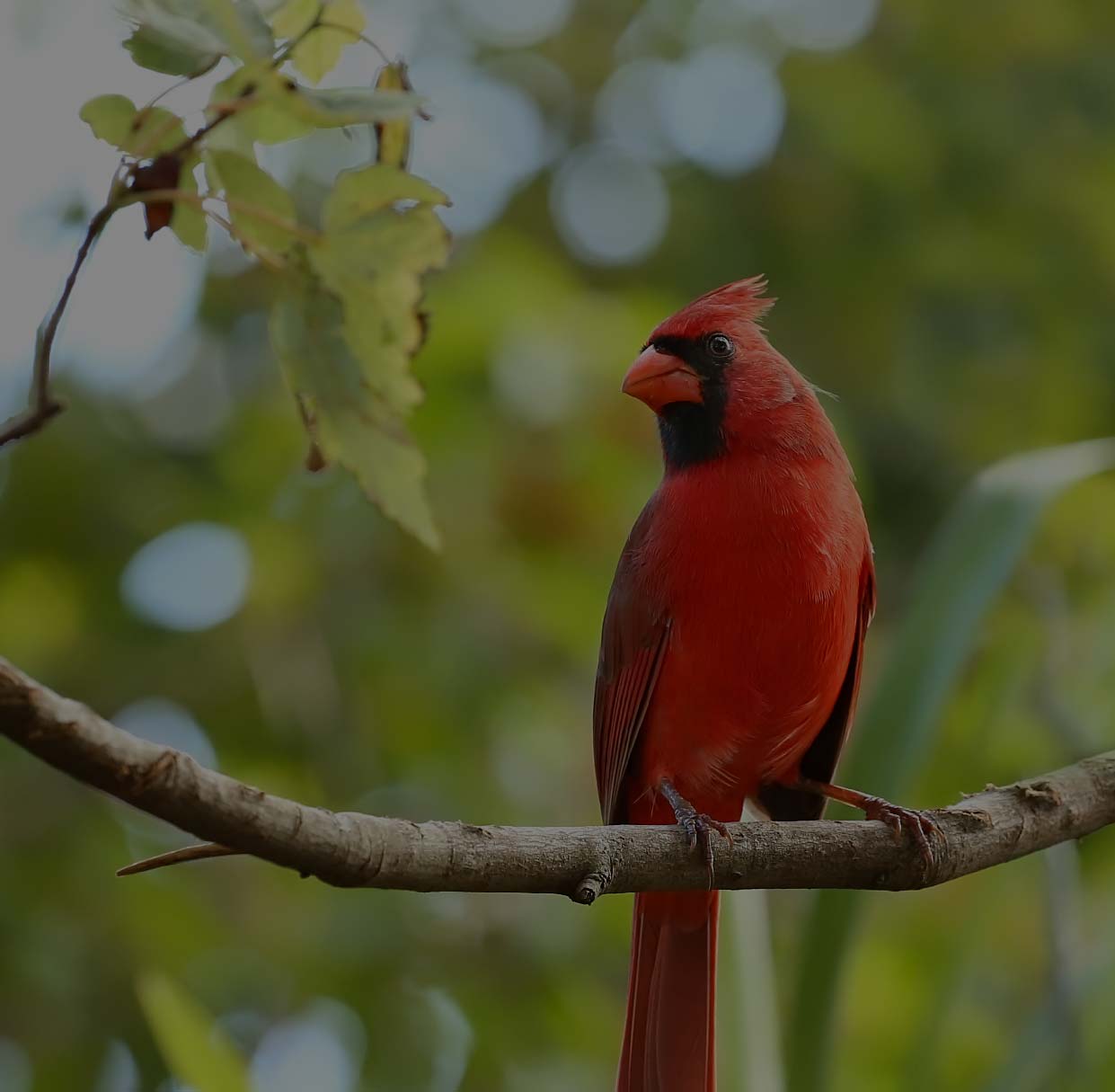
If you’ve ever lived in the eastern half of the United States, chances are you’ve seen the red cardinal. Also called the northern cardinal, this prolific bird can be seen in backyards, parks, forests, and wetlands.

Males feature a bright red plumage and beak, accompanied by a distinguishing tuft of feathers sticking almost straight up from the top of his head. A male’s wings and tail feathers form a richer and darker red than the rest of his coloring, and a shock of black around his red beak provides the bird’s signature contrast.

While male cardinals are easier to notice, the females are no less beautiful. A soft gray-brown covers most of her frame, though her wings and tailfeather are a warm, muted pink. Hints of orange highlight the tiny feathers around her eyes and coral beak, and a light tan runs down her chest. She, too, has a tuft of feathers forming a sharp angle on her head, tipped with the same subtle color of her wings.

From the middle of spring through the summer, you can find cardinals nesting in bushes, trees, and thickets. Both the female and the male cardinal care for their babies, with the offspring growing fully self-sufficient after 45 days. Sometimes, a pair of cardinals may raise up to two or three batches of young in a year.

Like many parents, they divide up their tasks. When you hear a female cardinal singing from her nest, her songs potentially serve as a reminder to her partner, letting him know that the hatchlings are hungry for dinner.

Like many parents, they divide up their tasks. When you hear a female cardinal singing from her nest, her songs potentially serve as a reminder to her partner, letting him know that the hatchlings are hungry for dinner.

Lakeside Reading At Its Finest

Summer in the mountains is a special time. What a perfect backdrop to the journeys you’ll take in the books of your choice, be they in fictional worlds, or non-fiction learning and growth.

Seven Cherokee Myths by Keith Parker

Does our interview with local resident Keith Parker leave you wanting to learn more? Order his book to examine seven myths that grew out of Cherokee culture, looking at how they emerged to explain archetypal issues.

Unraveling: What I Learned About Life While Shearing Sheep, Dyeing Wool, and Making the World’s Ugliest Sweater by Peggy Orenstein

In this lively, funny memoir, Peggy Orenstein sets out to make a sweater from scratch—shearing, spinning, dyeing wool—and in the process discovers how we find our deepest selves through craft. Orenstein spins a yarn that will appeal to everyone.

Whale Fall by Elizabeth O’Connor

Debut Author O’Connor paints a portrait of a community and a woman a remote Welsh island, forced to confront an outside world that seems to be closing in on them after a dead whale washes up on the shore.

Real Americans by Rachel Khong

This exhilarating novel of American identity spans three generations in one family and weaves a profound tale of class and striving, race and visibility, and family and inheritance—a story of trust, forgiveness, and finally coming home.

The Ministry of Time by Kaliane Bradley

This genre-bending book is the hit of the summer, incorporating a time travel romance, a spy thriller, a workplace comedy, and an ingenious exploration of the nature of power and the potential for love to change it all.

Brevard Music Center, From Then to Now

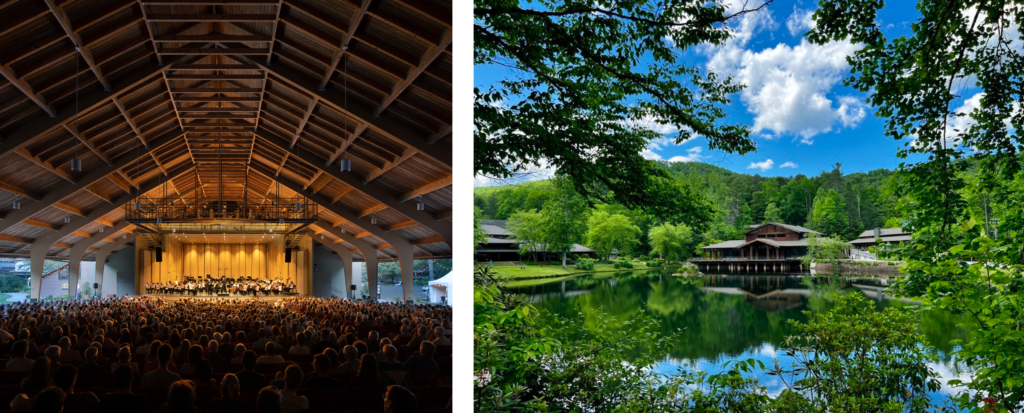
Every summer, the Brevard Music Center’s Summer Institute & Festival brings musicians and listeners alike to the small mountain town of Brevard. The Music Center came to town by chance in 1944 when James Christian Pfohl, who founded the Davidson Band Camp for Boys, came across the future site. According to President & CEO Jason Posnock, “Pfohl happened upon an abandoned camp on the outskirts of Brevard, and he knew he had found his new home.”

The Davidson Band Camp for Boys eventually became the Brevard Music Center, featuring musical lessons and performances. This decision to relocate to Brevard was monumental, both for the Music Center and for the town.

Nearby community members have long been the Music Center’s fiercest champions, attending concerts, donating to scholarship funds, and volunteering with the organization. The town, too, has influenced the music itself. “Brevard’s love of bluegrass and folk music has encouraged us to expand our concert offerings,” Jason explains. The Brevard Music Center, which once solely taught and performed classical music, now features music of all genres, such as jazz, bluegrass, and opera.

Just as Brevard has shaped the Music Center, so too has the Music Center shaped the town. Thousands flock to Brevard every year to attend the Summer Institute & Festival concerts, not to mention all the musicians who travel there to teach, learn, and play their music. “We help attract active and interesting people to Brevard to vacation and move here, make it possible for some wonderful restaurants to serve our town year-round, and are a huge part of the exciting live music scene that has emerged here over the past decade,” Jason says.

While most wouldn’t think a music center of this magnitude would flourish far from a big city, this location and community has led the Brevard Music Center to thrive. “A world-class classical music teaching and performing institution tucked into a town of 8,000 people in the Blue Ridge Mountains. The odds were probably not in our favor,” Jason acknowledges. “But our community has embraced us overthe decades and welcomed classical music, along with all the other genres we offer, into their hearts.”

To see this summer’s concert lineup, visit brevardmusic.org.

July 2024 Newsletter

Lake Toxaway’s Indigenous History: Keith Parker


G. Keith Parker, PhD, is the author of Seven Cherokee Myths: Creation, Fire, the Primordial Parents, the Nature of Evil, the Family, Universal Suffering, and Communal Obligation. He graciously answered several questions regarding the indigenous history of Lake Toxaway. This interview has been edited for length and clarity.

Can you give us a brief overview of the history of Native Americans in the Lake Toxaway region?

“The Toxaway area was inhabited exclusively by the Cherokee people, which made up the largest tribe in the Southeast. They were located in eight present states and dominated this part of Western North Carolina, upper Georgia, and upper South Carolina. They were a mountain tribe, called such by other tribes.”

Prior to colonization, what was daily life like for Native Americans around Lake Toxaway?

“They lived peacefully in small family groups, scattered over areas to allow farming, fishing, hunting, and sports with nearby groups. They grew together ‘the three sisters’ (corn, beans, and squash) as their main food since the crops grew on the same ground. Most likely, the main staple was corn. ‘Selu,’ or corn mother, was a major spiritual figure in their powerful myths. They were marksmen with their blowguns that they used for smaller animals and birds, as well as competitive target shooting. Special preparation was necessary to take big animals since they were considered kin. They were to be thanked for their sacrifice to feed humans.”

How did their lives shift over the course of colonization, including the Trail of Tears? 

“The arrival of Europeans was a disaster immediately and long range. In 1738, a century before the forced removal named the Trail of Tears, over half of the Cherokee people died of European disease — mainly smallpox. The inability of their own Cherokee rituals to cure this helped pave the way for eventual missionaries from Europe with medicines.

All treaties with colonists were broken, even with the Colonial Governor Tryon who let them ‘keep’ the land west of Tryon Mountain in today’s Polk County before the Revolutionary War. The worst, however, was the forced removal of over 16,000 Cherokee from their homes ordered by President Jackson. In my lifetime, many modern Cherokee would not use twenty-dollar bills with Jackson’s image on it. More than 4,000 men, women and children died on that forced march to the territory now called Oklahoma.

A Cherokee pastor, Rev. Busheyhead, buried thousands and ministered as he could. His Busheyhead descendants are still active leaders in the old homeland. The late Rev. Robert Busheyhead, who helped revive and restore the Cherokee language for the Eastern Band, also helped give Cherokee names to roads and locations in Transylvania county locations, such as the Connestee Falls Development.”

How has Cherokee history been passed down and preserved through oral tradition?

“Cherokee history and culture have been passed down in re-learning their language, once forbidden by the government and in their schools. The Museum of the Cherokee People is excellent, very modern, and tells their old story, as does the outdoor drama Unto These Hills. Notable is the work of former Principal Chief Joyce Dugan, who also wrote a forward to my book. She was in education before becoming chief and really strived to have their history told and taught. James Mooney was part Native American and a member of the Bureau of American Ethnology. He lived with the Cherokee, learning their language so he could record their oral tradition and stories. His work is the standard for seeing those: History, Myths and Sacred Formulas of the Cherokees.”

Find Keith’s book, Seven Cherokee Myths, here.

A Conversation with Kelly Holdbrooks from Southern Highlands Reserve

At 4500 feet above sea level, Southern Highlands Reserve is home to a high-elevation garden encompassing an exceptionally diverse array of flora and fauna. There, a wildflower labyrinth bursts with purple and pale yellow blossoms, bullfrog tadpoles swim in shallow water, and clusters of flowers bloom at the brush of a bee. Along with the rest of her team, Kelly Holdbrooks, executive director of the Reserve, is tasked with preserving this beautiful biodiversity.

“Western North Carolina is one of the most biologically diverse areas in the world,” Kelly explains. This is partially because of a southern migration thousands of years ago, as species escaped the spreading glaciers of the Ice Age. “They came down the spine of the Appalachian Trail and found what we refer to as ‘sky islands,’ where they can exist,” Kelly says.

In more recent times, however, logging has harmed the region’s forests. The Southern Appalachian Spruce Restoration Initiative (SASRI), of which the Reserve is a founding member, agreed that red spruces served as the “best hope” for repopulating forests in the region that were never able to fully recover.

The Reserve has spent the last ten years propagating and growing new red spruces for distribution across southern Appalachia. They are currently building a high-tech greenhouse to serve as a nursery for the spruces, enabling them to grow more trees than ever before.
In the video below, Kelly talks about how her team is increasing the Reserve’s biodiversity through sustainable landscaping, as well as her own personal love for the environment she works every day to preserve.


Click here to watch


Readers can support the Reserve’s Green-light the Greenhouse initiative here.

FOLLOW US ON INSTAGRAM